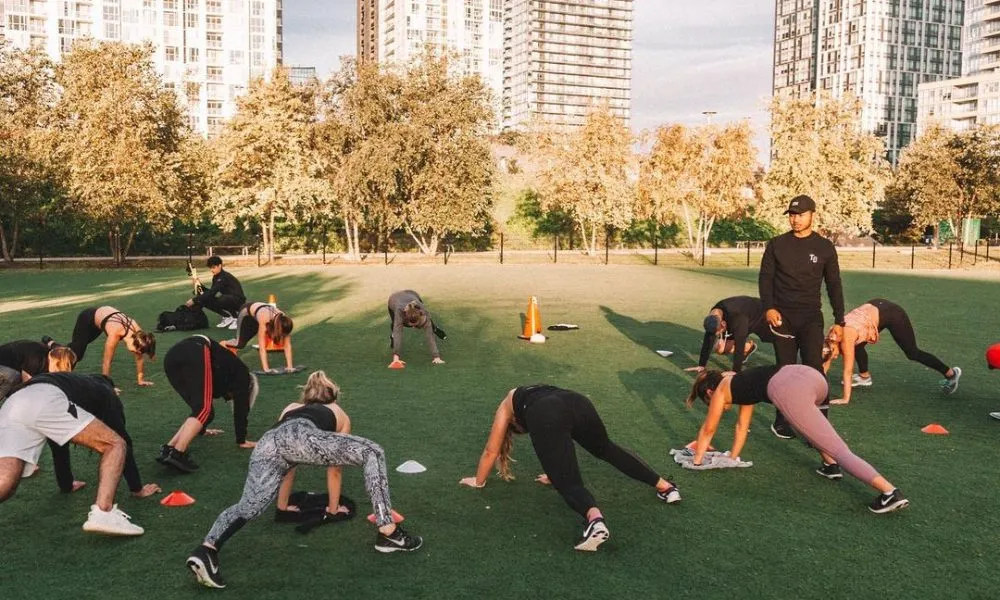
Calisthenics without the gym floor
Bodyweight patterns teach load management through joint angles and tempo—not through plates on a bar.
Push, pull, squat, and hinge variations scale by changing leverage: hand position, foot placement, and range of motion. Outdoors, subtle slopes and textures add feedback that a flat mat cannot replicate.
Our coaches cue alignment first, then volume. The aim is durable movement you can practice independently between workshops.
One movement, many levels
Toggle between leverage options for a push pattern and a squat pattern—no weights required.
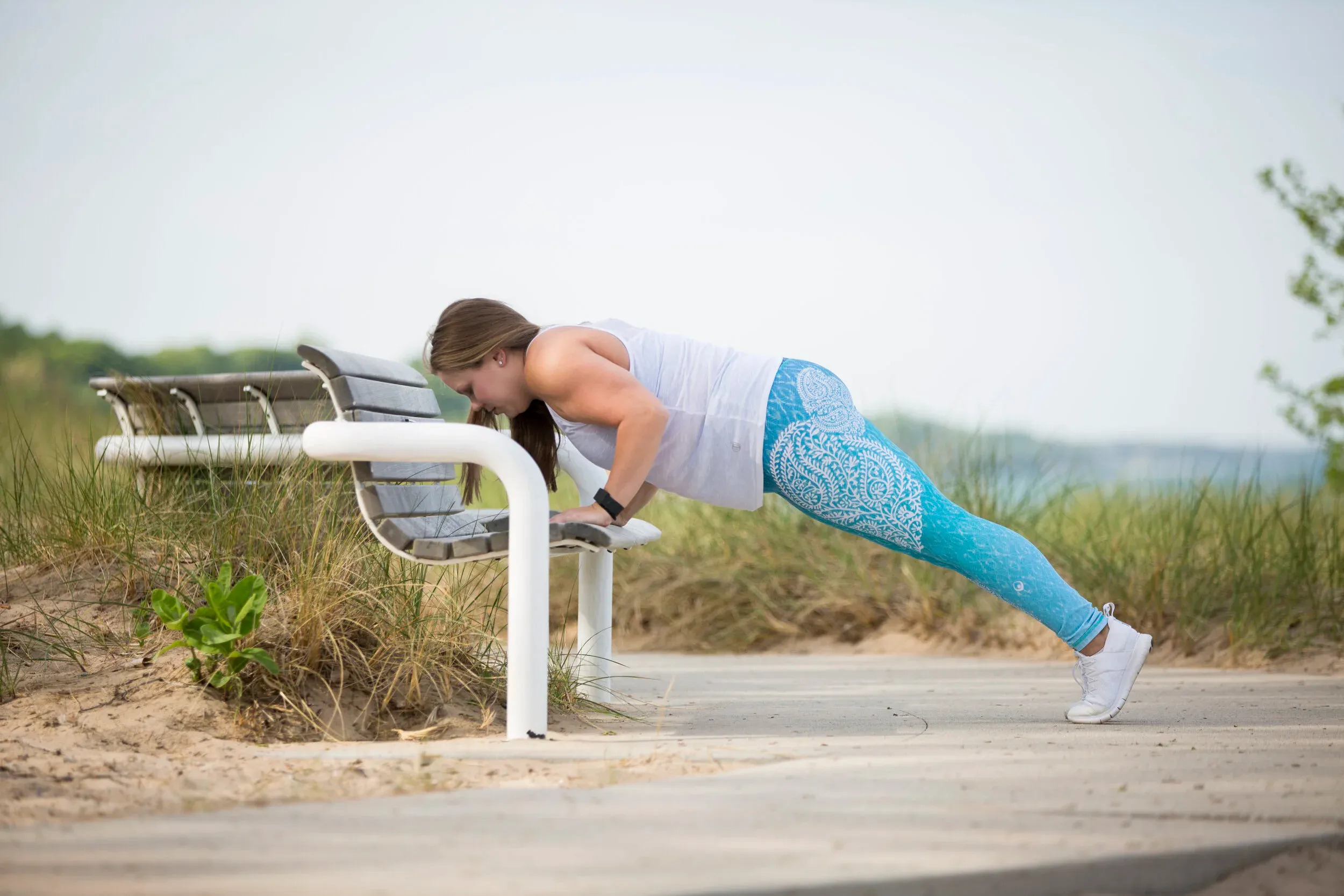
Incline to floor progression
High incline (hands on bench): More weight through the feet; shoulders stay above wrists. Suitable for building confidence.
Standard angle: Body in one line from head to heel. Elbows track slightly back, not flared wide.
Feet elevated: More load toward the upper body. Shorter range if wrists need relief.
Squat depth and support
Box-supported: Sit back to a log or step to learn hip hinge without losing heel contact.
Bodyweight: Knees follow toes; chest stays lifted; pause at the bottom if balance allows.
Paused deep squat: Longer time under tension with hands forward for counterbalance on uneven ground.
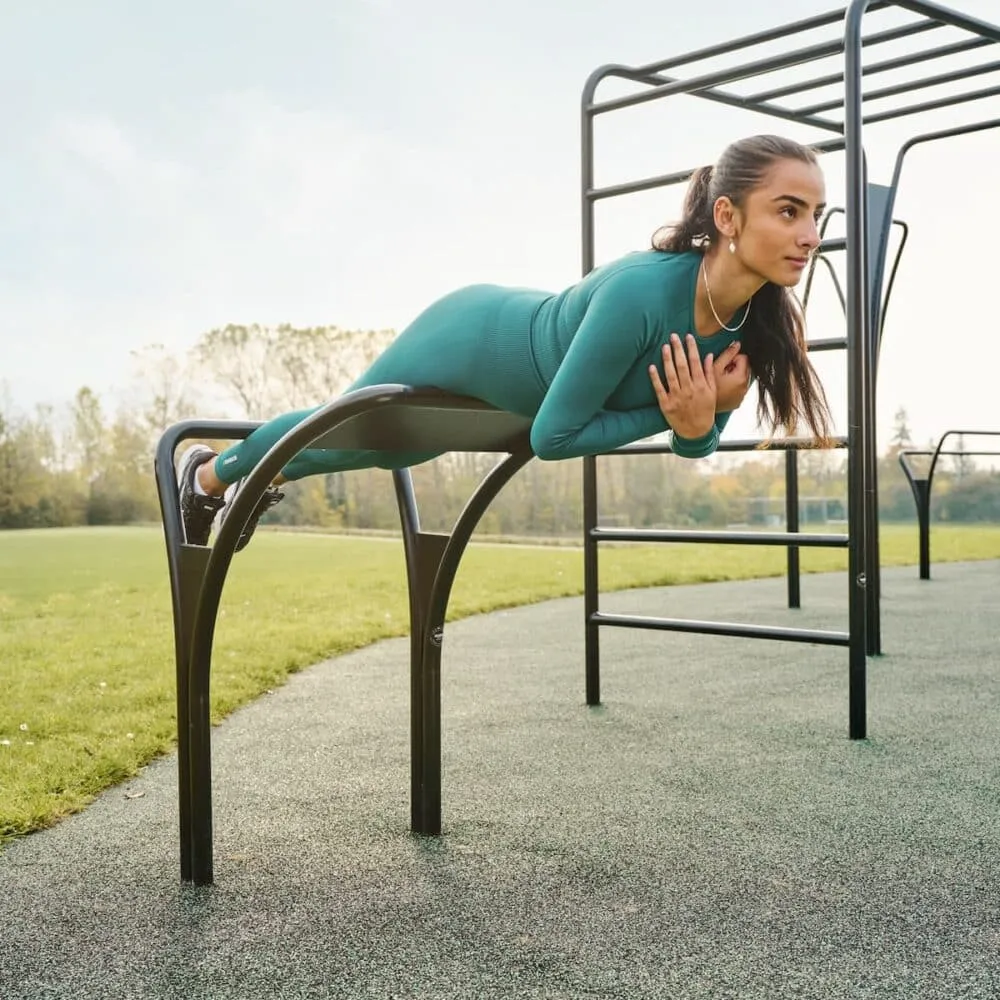
Spatial awareness in open air
Training outside trains your eyes and feet together. You notice slope, texture, and distance without a screen between you and the ground.
Short games—side shuffles around markers, controlled walks on lines—build coordination that carries into daily life.
Green exercise and attention
Research on activity in natural settings often notes improved mood and focus compared with indoor-only routines. We design sessions to be unhurried so you can notice breath, birdsong, and light.
We do not offer clinical programmes. Our role is to provide structured, coach-led movement in accessible outdoor venues. If you have questions about suitability, contact us before booking.